

Follow the Whitby Heritage Sculpture Trail and spot Emma Stothard's sculptures inspired by Whitby’s historic fishing heritage.
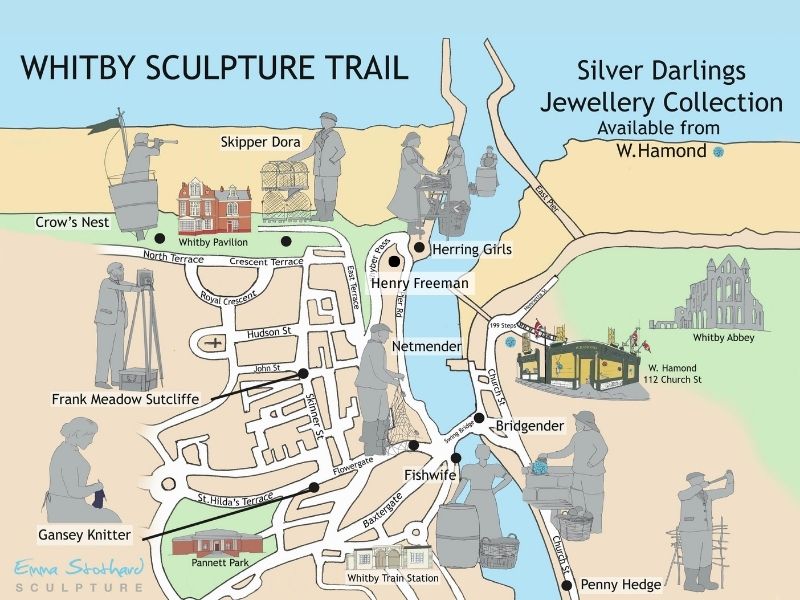
The Whitby Heritage Trail features 10 life-size sculptures by local sculptor Emma Stothard. Working in partnership with Scarborough Borough Council, Emma has created some of Whitby’s most famous characters, all with a powerful connection to the sea. These works of art are scattered across different parts of the East Side and the West Cliff area of the town.
Each figure is carefully woven by hand, made from steel wire wrapped around a steel armature, and then hot-dip galvanised. You can choose to see the sculptures in any order, but maps and signs are available to help you follow the designated trail route around the town.

Whitby Mini Guide
We have created a FREE mini-guide with all the essential information about Whitby, now available for instant download.
The Herring Girls

You can find the Herring Girls sculpture next to the bandstand. It shows a scene from the late eighteenth and early nineteenth centuries, when fishing fleets followed herring along this coast.
The ‘Herring Lasses' travelled by train to meet the boats, ready to gut and pack the day’s catch. The sculpture honours the strong, independent women who worked in small teams of two or three.
Two girls would gut and salt the herrings, while the third packed the fish into barrels.
Skipper Dora

If you walk up the Khyber Pass and pass the famous Whalebone Arch, you’ll bump into Skipper Dora Walker (1890-1980). Dora was born in West Yorkshire and became known as the first female fishing boat skipper on the North East coast.
She moved to Whitby during the Second World War after doctors advised her to do so. She bought a boat called the Good Faith and started fishing. Once she was qualified, she guided boats safely through the minefields.
Dora was the only woman to hold a skipper’s licence in the North Sea during the war. She also wrote memoirs about her time as a nurse in WWI and about the history of the fishing communities.
She remains another strong female role model for Whitby.
Crow’s Nest, William Scoresby

Along the West Cliff, you can meet the explorer William Scoresby, whose legacy is deeply tied to maritime history. Scoresby is best known as the inventor of the Crows Nest in 1807.
This ingenious mast-top lookout revolutionised seafaring by providing sailors with a higher vantage point to spot land, icebergs, or other ships, while also offering some shelter from the biting wind and relentless weather conditions at sea.
His invention greatly improved safety for countless crews navigating treacherous waters.
Frank Meadow Sutcliffe

You can find the famous photographer Frank Meadow Sutcliffe on Skinner Street. Born in 1853, Sutcliffe became known worldwide for his remarkable photographs of everyday life in Whitby.
His images often captured vivid glimpses of the town's daily routines, traditions, and characters during the late 19th and early 20th centuries. Sutcliffe’s work helped put Whitby on the map for photography enthusiasts, and his artistic eye transformed ordinary moments into captivating pieces of social history.
He’s aiming his camera down the street where his studio once stood. Stop by and take a photo with him.
Gansey Knitter
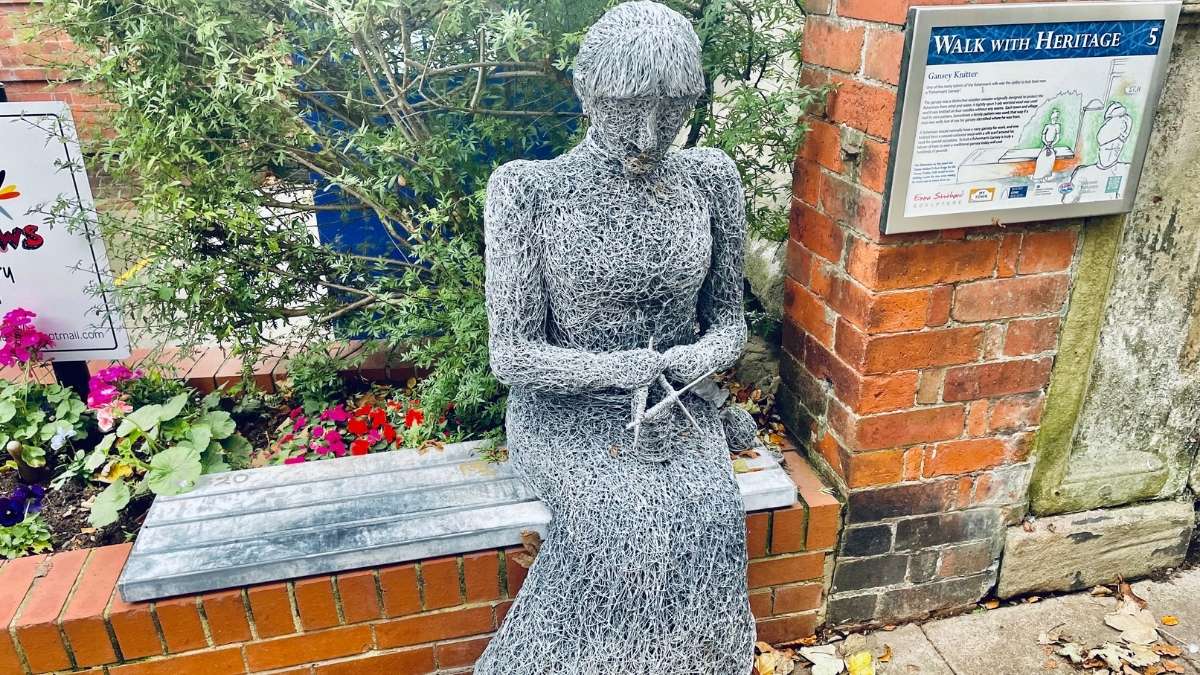
At the top of Flowergate, you’ll find the Gansey Knitter sitting on a wall.
A gansey is a sweater that fishermen’s wives used to knit in unique patterns. Each town or village had its own design, so it is believed that if a fisherman was lost at sea, his gansey could show where he was from when his body was found.
These sweaters were made from tightly spun worsted wool, making them very durable and weatherproof, protecting their owners from harsh conditions.
Netmender
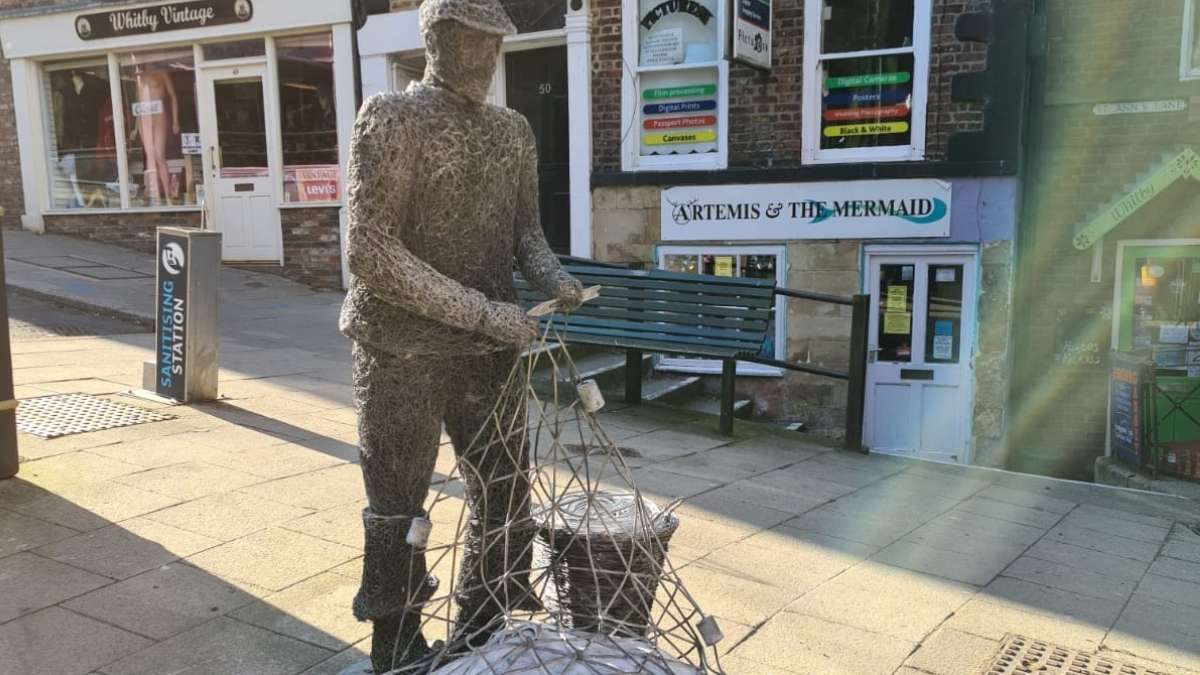
If you walk down Flowergate, you’ll come across the Netmender, an important person in the town’s fishing community.
When Whitby’s fishing industry was at its busiest, the Netmender’s workshop was always full of activity. Fishing gear, especially nets, needed constant care because saltwater and daily use could easily cause tears or loosen knots. If nets weren’t regularly repaired, fishermen could lose their catch and risk their livelihoods.
The Netmender worked hard to patch holes, strengthen seams, and ensure every net was ready for the sea. This careful work was vital for both a good catch and the safety of the fishing fleet.
Today, the Netmender’s legacy reminds us of the skilled work that kept Whitby’s fishing industry strong.
Fishwife

Go to the Swing Bridge and look to the West side to spot the Fishwife with her barrel of fish, a symbol of Whitby’s hardworking fishing families.
Fishwives played a key role in the community. They often got up before dawn to help prepare and bait lines, clean and sort the daily catch, and carry heavy loads of fish through busy streets. Their work continued at home, where they managed the household, raised children, and sold the catch to locals and visitors, sometimes calling out to attract customers.
Fishwives, strength, and determination were vital for their families and for Whitby’s fishing trade. Their legacy is a reminder of the resilience and hard work that shaped the town’s history.
Bridgender
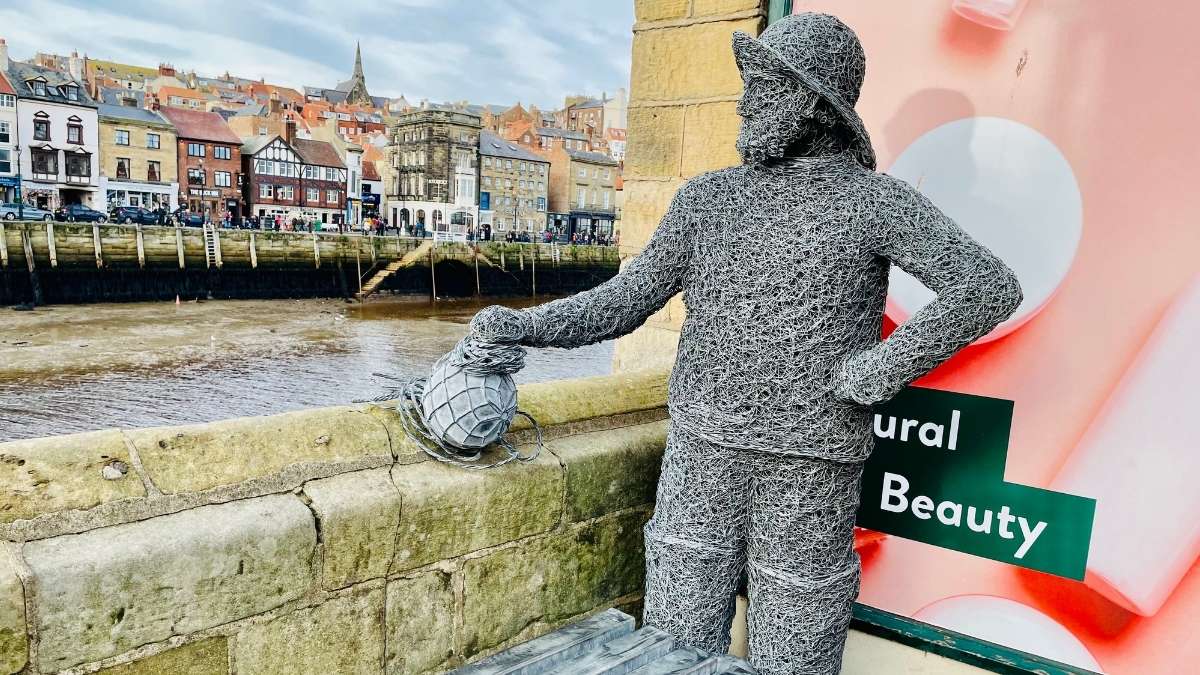
In a well-known photo by Frank Meadow Sutcliffe, the Brigender stands alone at the far end of the bridge. He leans against the harbour railings, quietly watching the sky and sea as he decides whether to set out.
For Whitby’s fishermen, these choices were important because the weather could change quickly and turn a good day into a dangerous one. The Brigender’s careful pose shows the respect and experience local fishermen gained over the years. Sutcliffe’s photo captures this daily moment and reminds us of the challenges faced by those who worked at sea.
Today, the Brigender honours the wisdom and strength of Whitby’s fishing community.
Penny Hedge

Walk along the riverside, and you’ll find Emma’s tribute to one of Whitby’s strangest legends. Whitby has many stories, but this one stands out.
In the autumn of 1159, some noblemen were hunting when their dogs chased a boar into a hermitage. The hermit shut the door to protect the animal, which enraged the hunters. They attacked the hermit and left him for dead. As he was dying, the hermit asked that, instead of the death penalty, the hunters and their descendants perform an annual penance.
They had to build a woven hedge from branches cut with a simple, inexpensive knife. The hedge had to survive three tides, or the lords would lose their lands. Every year, at 9 am on the day before Ascension Day, 39 days after Easter, the Penny Hedge is planted.
During the ceremony, a horn is blown three times, and someone calls out, “Out on ye, out on ye, out on ye!”
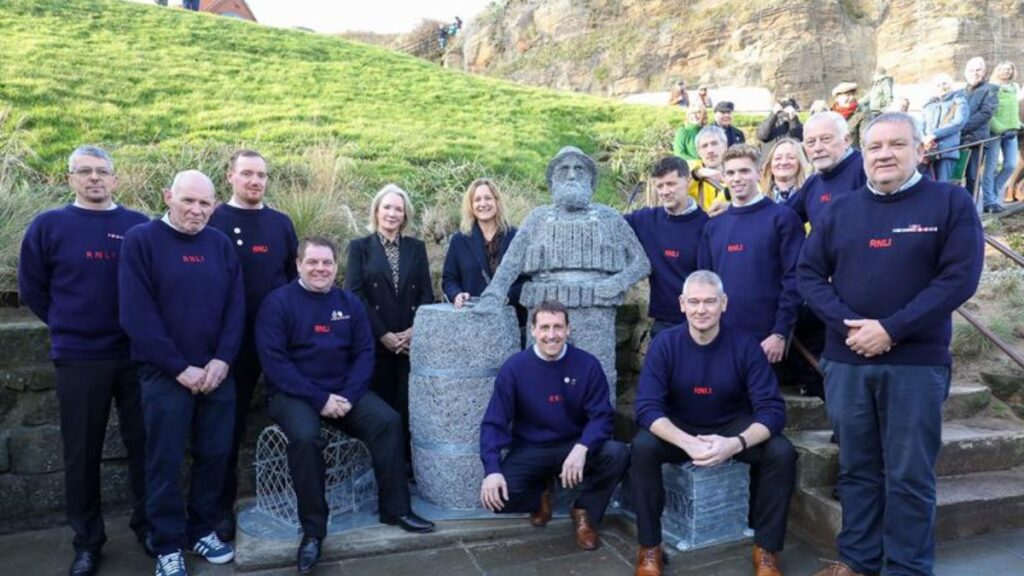
Henry Freeman was the only person to survive a tragic lifeboat disaster in Whitby in 1861, an event that deeply affected the town’s maritime history. He survived because he was the only crew member wearing the new cork lifejacket, a safety device that proved its value in those harsh conditions.
Freeman’s bravery was widely recognised, and he received a medal for his courage. He later served as Whitby’s lifeboat coxswain for many years.
His story remains a symbol of heroism, innovation, and dedication to saving lives at sea, inspiring future lifeboat volunteers and strengthening Whitby’s maritime rescue tradition.
Whitby Sculpture Trail Map








Found them all when we were there in June Brillant 👀👍👍
I wish the lifeboatman could be included…
Hi Di, we will soon be updating this article to include the new Henry Freeman sculpture.
Love this info and the sculptures
Love Whitby it’s my favourite place on the planet
Unfortunately I won’t be able to see them
I now live in Melbourne Australia
Whitby was the last place I visited before leaving
I was born and raised in Billingham Teeside
Always enjoy my day trips down from Durham by coach. Wish I lived nearer as I’d be there every day. Such an interesting place with great views, shops and history. Don’t ever spoil it! Xx
Jane