

Visiting the seaside arcades when we were kids was so exciting! But are they harmless, more harmful than we think or just ripping us off? Here, we look at the rise and fall of traditional seaside arcades.
We have great memories of saving our pennies to visit seaside arcades with our grandparents and leaving with hands full of prizes. After taking our kids to experience the same joy yet leaving £20 lighter with a yoyo and some Haribo if we're lucky, it's hard not to notice the decline of these traditional arcades.
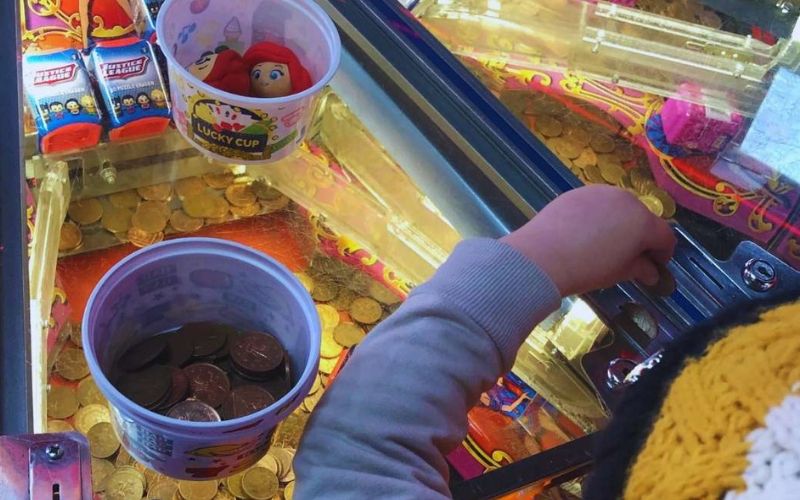
Here, we look at whether the games have become more challenging to win, evaluate the evolution of prizes, and discuss whether arcades are just a bit of fun or potentially harmful to children.

Whitby Mini Guide
We have created a FREE mini-guide with all the essential information about Whitby, now available for instant download.
The rise of traditional seaside arcades
There's a reason we have such fond memories of traditional seaside arcades, and so do our parents and grandparents. The heyday of seaside arcades can be traced back to the mid-20th century. During this period, they were not just popular but a huge part of the seaside holiday experience for adults and children.

The arcades were packed with games for all ages, including pinball machines, skeeball, and early video games like Space Invaders and Pac-Man. The atmosphere was electric—flashing lights, ringing bells, and coins clattering. Winning a game was a huge deal!
The fall of traditional seaside arcades
The rise of home gaming consoles and personal computers in the late 20th century saw the decline of traditional arcades begin. Systems like the Nintendo Entertainment System (NES) and the Sega Genesis brought the arcade experience into living rooms.
This trend continued with the rise of mobile gaming, where games became even more accessible, fitting right into our pockets.
Rising costs
Running an arcade is a considerable expense, as is maintaining and repairing arcade machines. Coupled with rising property values and rents in prime seaside locations, many arcade operators found it increasingly difficult to remain profitable.
This led to the closure of many arcades, and those that survived had to adapt to changing times and tighter margins.
Are the prizes and games harder to win?
We really feel like the prizes are much harder to win now. We're not alone; many arcade enthusiasts feel that games have become harder to win over the years, and it's disheartening.

Modern arcade games may be designed to offer fewer wins to increase profitability. However, regulations in some regions have mandated greater transparency about game odds, ensuring fairness.
Are the prizes better or worse?
Traditionally, arcade prizes were simple yet sweet—stuffed animals, plastic toys, and quirky trinkets. These prizes were often low-cost, but the thrill of winning them made them valuable in the eyes of the players.
Today, prizes vary widely. Some arcades offer high-value items like electronics and gift cards, branded stuffed animals people will be desperate to win, and even huge-value items, while others still stick to low-cost, mass-produced items.
The perceived value of these prizes has shifted, with many players feeling that modern prizes lack the nostalgic charm despite being more expensive.
Service in seaside arcades then and now
In the past, service was more personal. Friendly attendants helped players with machines, exchanged tokens, and shared excitement about a big win.

Today, some arcades still provide excellent customer service.
However, most of the arcades we have visited have reduced personal interactions. Self-service machines and digital ticket counters are standard, giving efficiency but sometimes at the cost of a warm, personal touch. If there's an issue with a game or machine, finding someone to help you is not easy.
Food at seaside arcades
Every visit to a seaside arcade was complete with indulging in some classic refreshments. Hot dogs, candyfloss, giant lollipops, and ice cream were must-haves.

We have to admit that many arcades still offer these classic options, but many also offer a more diverse range of food. We have seen everything from gourmet-topped popcorn to stacks of waffles with all kinds of creative toppings. Many also cater to healthier choices and reflect contemporary trends.
This shift is part of a broader effort to enhance the overall visitor experience and encourage more extended stays (and more spending) at the arcade.
But could arcades be harmful to children?
We hadn't considered this before because we have fond memories of visiting seaside arcades as children, but they can be potentially very harmful. First, arcade games are often designed to be addictive and can encourage excessive and compulsive gaming.

The prizes offered at arcades may contribute to a materialistic mindset in children, as they are often cheaply made and have little real value. In addition, children may become fixated on winning these prizes, which can lead to disappointment and frustration if they are unable to do so.
Furthermore, the environment in arcades is overstimulating. Loud noises, flashing lights, and crowded spaces can be overwhelming for some children, which could lead to stress and anxiety.

While arcades can provide nostalgic entertainment, be mindful of their potential negative effects on children's well-being.
While the atmosphere may feel very different now, the games may feel harder to win, the prizes may have changed, and the service and food offerings have evolved, the appeal of arcades—fun, excitement, and a touch of nostalgia—remains.
As some arcades adapt to the modern age with enhanced experiences. They continue to provide a cherished form of entertainment, preserving a slice of seaside magic for future generations.
There are other opinions that arcades are the perfect antidote to gambling and that they have positive effects on the psyche of children. What do you think? Let us know in the comments, we love to hear what you think!






Related Posts