
Learn about the Bombardment of Whitby and the Memorial Garden.
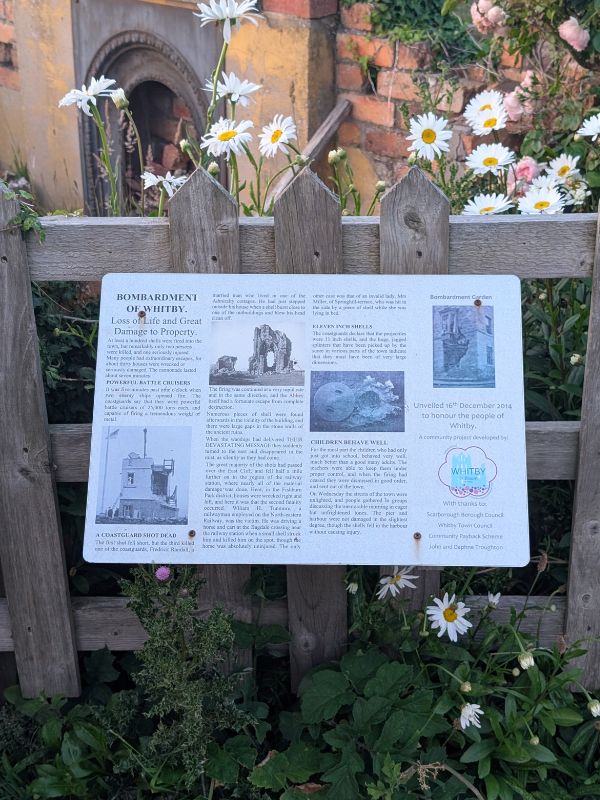
On the 16th December 1914, people across Whitby began their day as usual. Children made their way to school, railway workers started their shifts and coastguards watched over the North Sea from the East Cliff. Shortly after 9 am, two German battlecruisers appeared offshore and opened fire on the town.
More than 100 shells were fired in just seven minutes, killing two people, seriously injuring another and damaging homes across Whitby. The First World War had reached the Yorkshire coast.

Whitby Mini Guide
We have created a FREE mini-guide with all the essential information about Whitby, now available for instant download.
The morning Whitby came under attack
The bombardment began at around 9.05am, when the German battlecruisers Von der Tann and Derfflinger approached Whitby from the south-east.
Their main target appears to have been the Coastguard Signal Station on the East Cliff, close to Whitby Abbey. The first shell fell short, but the ships then began firing rapidly. At least 100 shells were fired during the brief attack, with evidence given at the subsequent inquest estimating the number at between 100 and 150.
The noise must have been terrifying. A report published in the Whitby Times described shells passing over the town with a sound like thunder and barely any pause between the shots.
Although the bombardment lasted only around seven minutes, it left two people dead, one woman seriously injured and approximately 30 homes wrecked or badly damaged.
The people killed during the bombardment
Coastguard boatman Frederick Randall was killed near the Admiralty cottages on the East Cliff. The 30-year-old had stepped outside when a shell exploded close to the buildings.
Randall left behind his wife and four children, the youngest of whom was only around six months old.
The second person killed was 61-year-old railway worker William Edward Tunmore. He was driving a horse and cart near Bagdale crossing, close to Whitby railway station, when a small shell struck and killed him. Contemporary accounts recorded that the horse survived unharmed.
Mrs Miller of Springhill Terrace was seriously injured after being struck by a shell fragment while lying in bed. Other residents suffered cuts and bruises caused by broken glass, debris and flying splinters.
The number of casualties could easily have been much higher. Shells tore through roofs, destroyed furniture and ripped the fronts from homes. One reportedly crashed through a bed that had been occupied only a short time earlier.
Damage across Whitby
Most of the shells passed over the East Cliff and landed around the railway station and Fishburn Park. Shells also fell near Bagdale crossing and in fields at Springhill, close to the police station.
Homes in the affected areas were wrecked or badly damaged. Once the firing stopped, the German ships turned east and disappeared back into the mist.
Whitby Abbey was also struck during the bombardment. The shelling caused considerable damage to its west front, with much of it collapsing. The damaged section was later repaired using original masonry.
Standing beside the abbey today, with views across the town and harbour, it can be difficult to imagine shells landing around the headland. However, the damage caused that morning remains an important part of the site’s more recent history.
Part of a wider attack on the Yorkshire coast
The bombardment of Whitby formed part of a larger Imperial German Navy raid on Scarborough, Whitby and Hartlepool.
One aim of the raid was to draw out and isolate part of the Royal Navy, giving the German fleet an opportunity to attack it. The ships that bombarded Whitby had already shelled Scarborough before travelling north along the coast.
The raids caused civilian deaths and widespread damage, shocking people across Britain. For many, the attacks brought home the reality that the war was no longer something happening only across the Channel.
Whitby had few military defences, and residents had little warning before the shells began to fall.
Whitby’s Bombardment Memorial Garden
More than a century later, the town continues to remember the people affected by the attack.
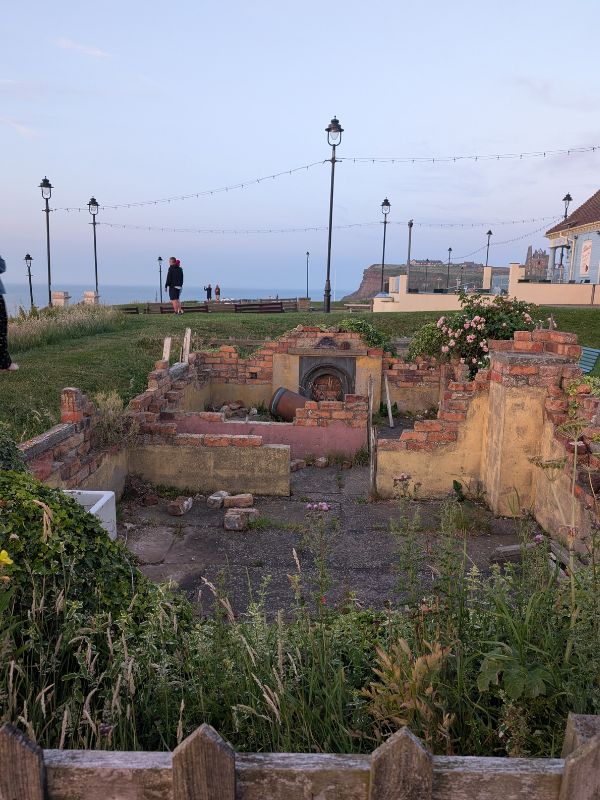
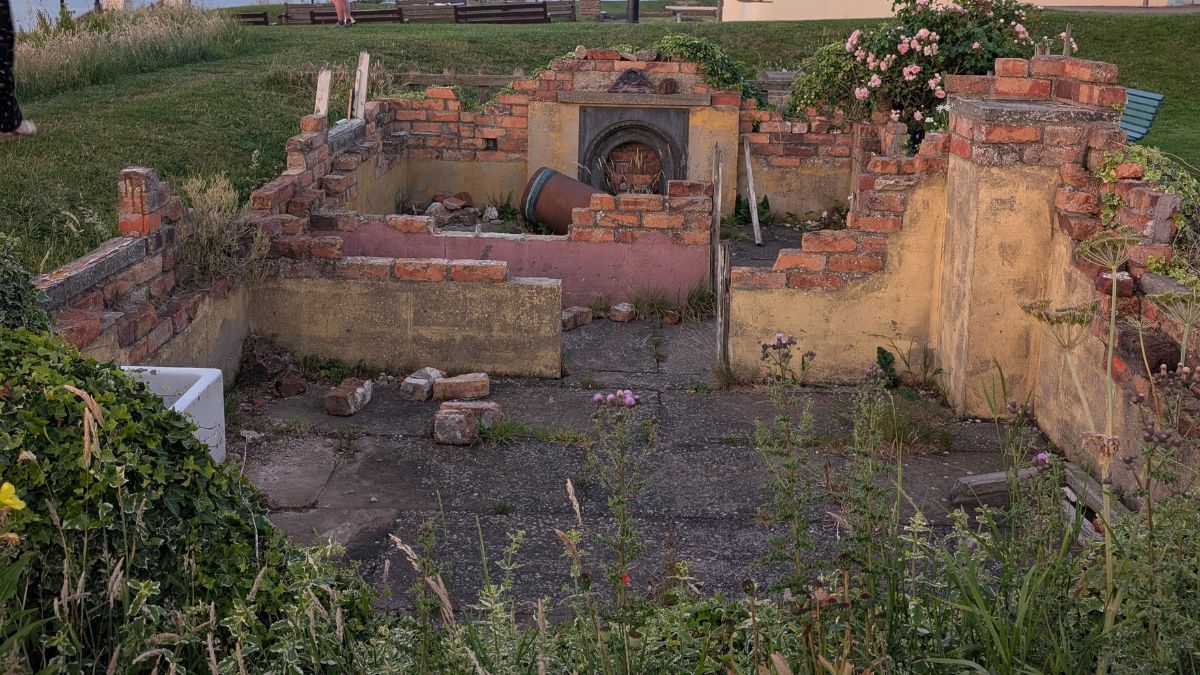
The Bombardment Memorial Garden was unveiled on the 16th December 2014, exactly 100 years after the shelling. It sits in a sunken garden on Whitby’s West Cliff, close to the Captain Cook statue.
Designed to resemble a home damaged by shellfire, the memorial features broken walls and an inert 11-inch shell. It was created as a lasting tribute to the people of Whitby who experienced the bombardment and the wider impact of the First World War.
It is easy to pass the garden without realising the story behind it. However, it offers a quiet place to pause and remember the morning when more than 100 shells were fired at Whitby in the space of just a few minutes.
Location: Whitby YO21 3EN
The bombardment lasted only seven minutes, but its impact on the town lasted far longer. Have you visited Whitby’s Bombardment Memorial Garden or noticed the signs of the shelling around Whitby Abbey?






Related Posts