
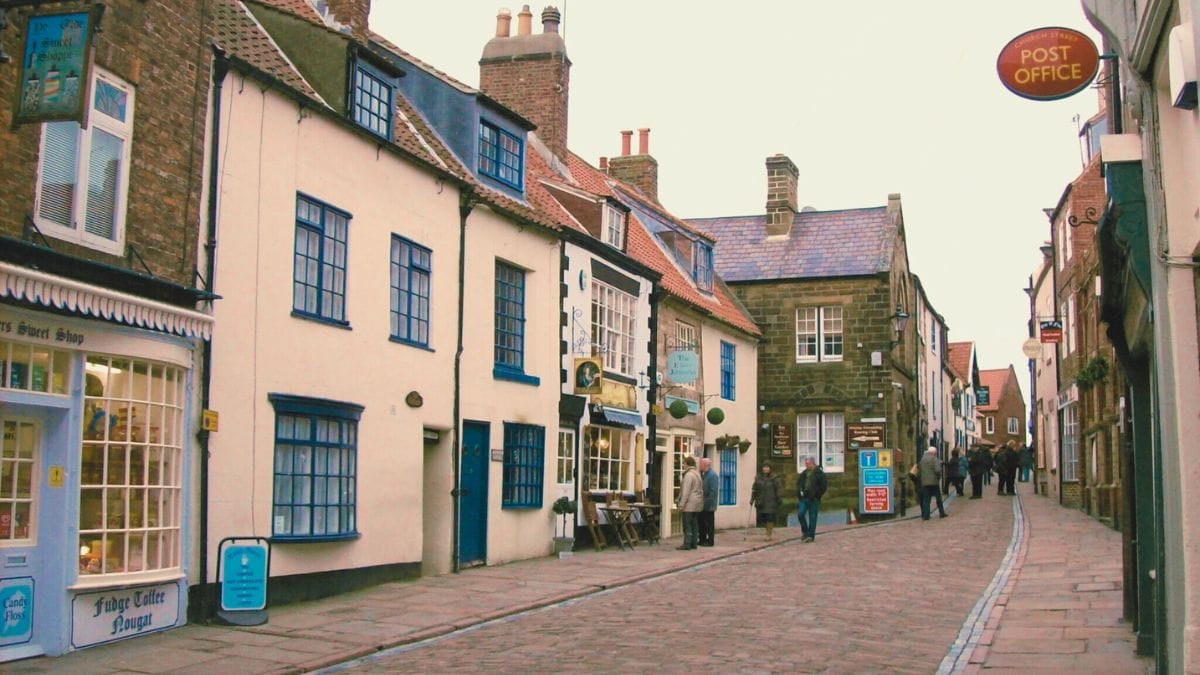
Among its many streets, Church Street stands out as a significant thoroughfare in Whitby, intertwining the past with the present.
Church Street, originally named Kirkgate, is located below the 199 steps leading up to Whitby Abbey. We love to stroll along the cobbled street. You'll encounter several cottages and houses dating back to the 15th Century when the Abbey thrived before Henry VIII's intervention. This blog post explores the history of Church Street and Church Street today.
History of Church Street
Dwellings were documented at the foot of the Abbey steps as early as 1370. St Mary's Church became a focal point for the community, drawing visitors from near and far. As Whitby developed, Church Street emerged as a vital route connecting the church to the port and the market square.

Whitby Mini Guide
We have created a FREE mini-guide with all the essential information about Whitby, now available for instant download.
During the medieval period, Church Street served as a pathway for parishioners and a hub of activity for traders and fishermen. The area thrived by exchanging goods, mainly fish, central to Whitby's economy. Many of the buildings that lined the street were constructed during this time, showcasing the distinctive architecture of the era.
St Mary's Church and The 199 Steps
St. Mary’s, Whitby’s Parish Church, situated on the East Cliff, was established in 1110. Certain sections of the church trace back to the Norman era, during the early 12th Century. It has undergone modifications and expansions throughout the centuries without complete reconstruction.
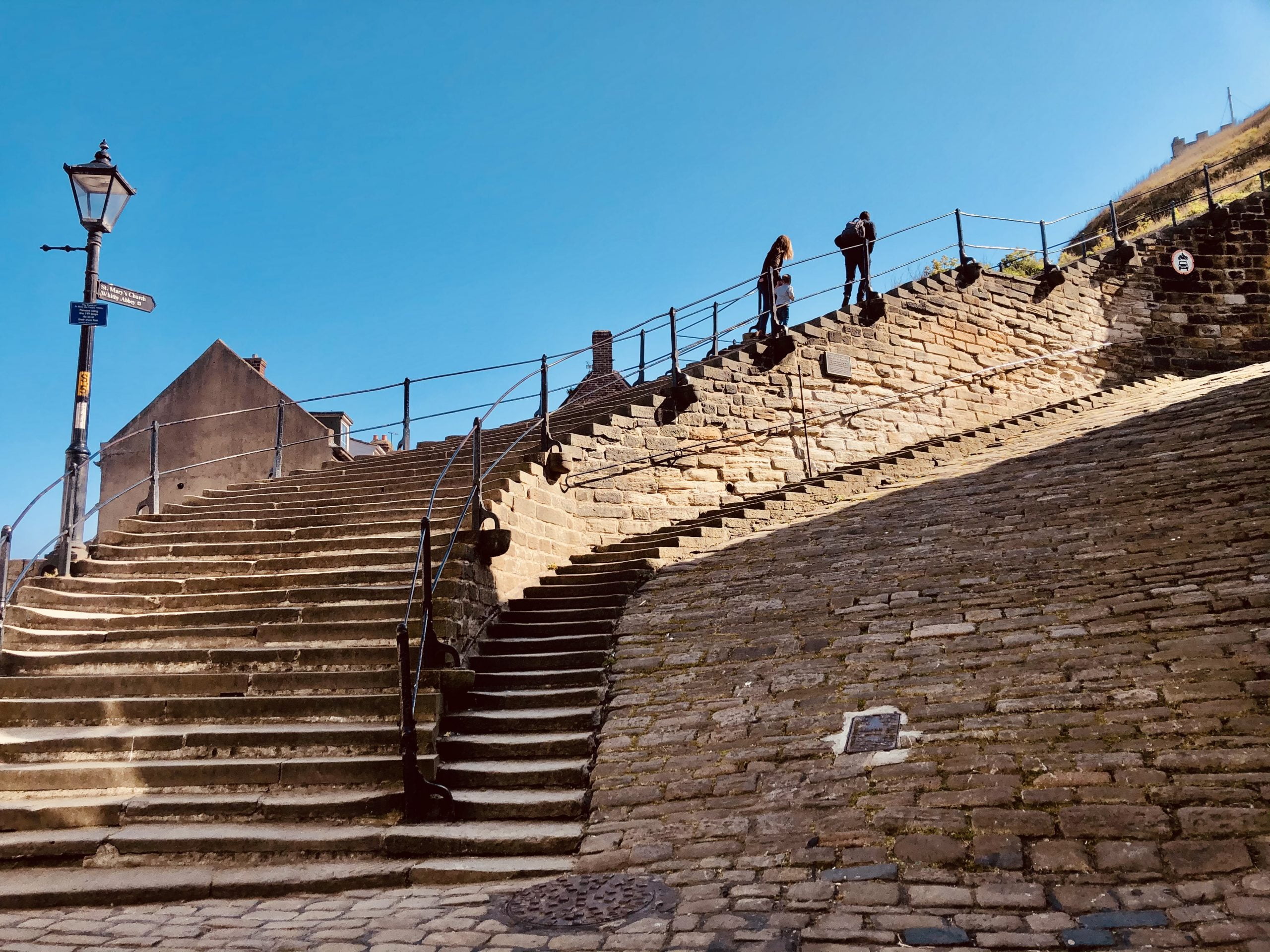
As you ascend the 199 steps from Church Street, you may have stopped to take a break on one of the small benches along the staircase to rest and enjoy the view. While these benches provide a welcome respite, many people are unaware that they were originally used to rest coffins.
In the 19th century, St Mary’s Church allowed burials in their churchyard. It was customary for the deceased to be carried up the steps from Church Street, which presented a significant challenge. Benches were installed on the 199 steps to provide pallbearers with a place to rest coffins during their journey upward.
Whitby's Old Town Hall
The Old Town Hall in Whitby stands on Church Street and was financed by the local lord of the manor, Nathaniel Cholmley. The architect Jonathan Pickernell designed and built it in the neoclassical style. Additionally, Pickernell was responsible for constructing the two inner piers in Whitby Harbour between 1781 and 1812.

The building has an open ground floor, with the upper floor supported by Tuscan columns, allowing the undercroft to be used for market trading. The upper floor, accessed via a central spiral staircase, served as the meeting place for the Court Leet of Whitby, the Court of Pleas, and the Court of Piepowder.
Those found guilty would occupy the stocks outside the building. The upper floor features arches with pedimented Venetian windows.
The building was granted listed status in 1954 and underwent renovation in 1987. However, it is prone to decay, with some stone falling off the top of one of the columns.
Whitby's marketplace
Whitby has had a marketplace since 1640. In 1788, Nathanial Cholmley built a new marketplace to replace the old one on the town's west side.

Additionally, the marketplace was home to two well-known public houses, the Jolly Butcher and the Seven Stars. These establishments gathered spots for Whitby fishermen to distribute their catches and conduct business negotiations.
The marketplace had a darker side as well. It served as a place for public punishments of vagabonds and thieves. On March 3rd, 1710, two individuals were whipped there, and the stocks on the South side near Church Street remind us of this history.
Brewster's Lane, which dates back to 1426 A.D., used to be part of the old shambles connecting Church Street to Fish Pier, but it has since been demolished.
Church Street during the 19th century
The 19th century brought change to Church Street and Whitby as a whole. The advent of the railway in the mid-1800s transformed the town into a popular seaside resort, attracting visitors seeking leisure and respite.
Church Street became a vital route for holidaymakers, lined with shops, inns, and cafes that catered to the growing tourist trade.
Many Victorian buildings still stand today, embodying the Victorian architectural style. The street buzzed with life as artists, writers, and tourists flocked to experience Whitby's natural beauty and rich culture.
Church Street today
Fast forward to the present, and Church Street remains a vibrant and essential part of Whitby. While it has evolved, its historical essence endures. The street is now a blend of the old and the new, featuring local artisan shops and eateries that celebrate the region's culinary heritage. Local shops offer unique souvenirs, crafts, and artwork, making it a perfect destination for those seeking a taste of Whitby's local flair.
We love to eat and drink at The White Horse and Griffin
As one of the oldest properties on the east side of Whitby, built-in 1681 by Sir Hugh Cholmley, it encapsulates the town's rich heritage, making it a must-visit for those interested in Whitby's history.

Initially serving as the first Coaching Inn from Whitby to York and London, it operated as a coaching Inn until 1939. The inn also served as a meeting place for renowned explorers Captain James Cook and William Scoresby, who utilised the building to hire and fix their crews.
Following its closure in 1939 on the day of the Battle of the River Plate, the inn fell into disrepair in the post-war years and was predominantly used as storage for local fisherman's nets and pots.

Since its reopening in 1993, the White Horse and Griffin, centred around an outstanding restaurant, has become a renowned success story. It preserves its historical significance while offering a unique experience for visitors.
A visit to Yorkshire, let alone Whitby, would only be right with a hearty roast dinner and a giant Yorkshire Pudding at The White Horse and Griffin. Served as part of their Sunday roast, it pairs perfectly with roast beef and rich gravy.
87 Church St, Whitby YO22 4BH
Pick up beautiful jet jewellery at Ebor Jetworks
Ebor Jetworks is located in a 17th-century workshop on Church Street. It is a renowned jeweller and a hub for jet research. Jet, as many may already know, is formed from wood that has undergone compression and fossilisation over millions of years.

It gained immense popularity in Victorian England for creating mourning jewellery, with even Queen Victoria adorning it. However, its popularity waned over time, resulting in a need for more skilled jet workers.
A talented jet worker, Sarah Steele showcases her expertise in beautifully designed and handcrafted pieces. The selection includes pendants, earrings, bangles, bracelets, brooches, and giftware like thimbles and key rings.
138 Church St, Whitby YO22 4DE
Taste Justin Chocolatier's delicious treats
Justin Chocolatier has been dedicated to crafting traditional confections for many years. They take pride in creating everything in-house, producing heavenly and delicious treats.

Some popular items from their wide selection of fudge, toffee, and chocolate include Captain Cook’s rum truffle cannonballs, fondant-filled Dracula’s coffins, rum' n raisin, chocolate orange, special Christmas fudge, and mint and cinder toffee-flavoured chocolate.
129 Church St, Whitby YO22 4DE
Church Street Yards
Whitby yards, alleyways, and ‘ghauts,' known locally, are the spaces between tiers of houses built back and back into the cliffs in Whitby to house fishing families.
Whitby's yards were frequently overcrowded, with up to 30 or 40 families living in them at one time. The limited housing would have felt extremely cramped, and the yards would have served as an extension of the family homes, accommodating large families in small spaces. Some of these yards were demolished. A few remain on Church Street.
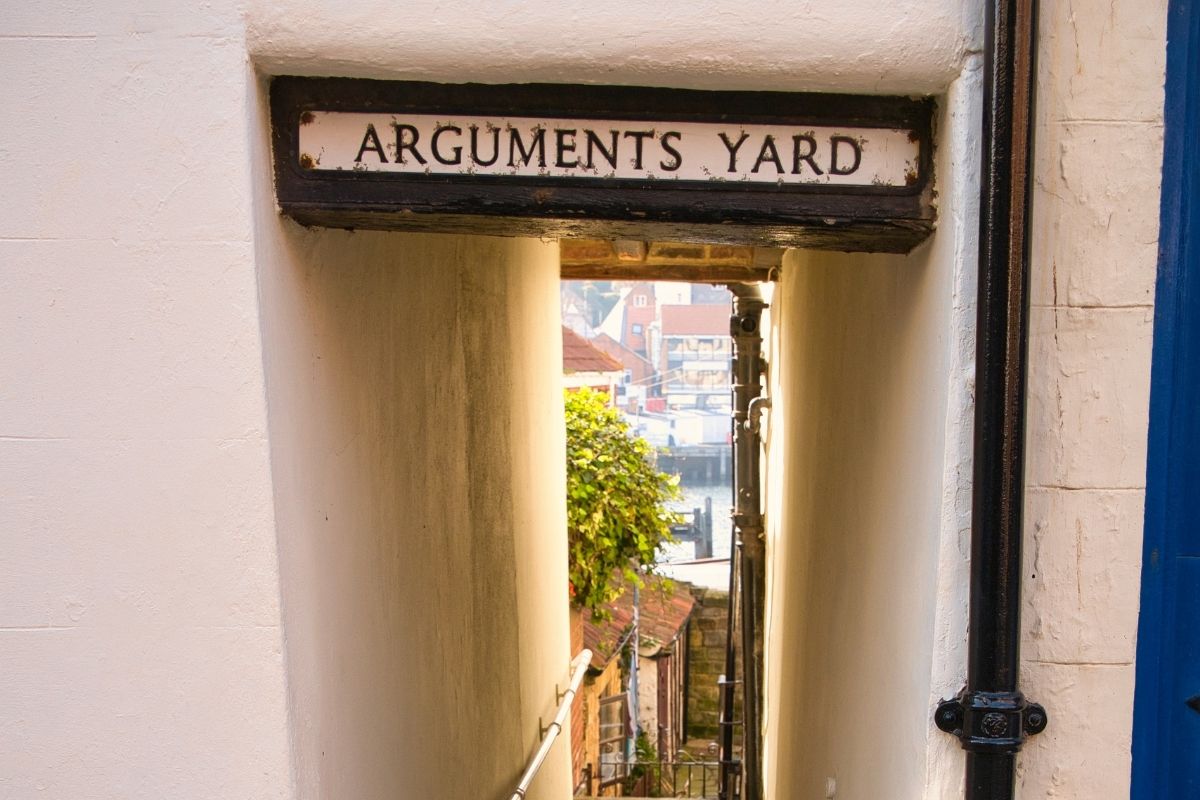
One of our favourites is one of the most well-known yards in Whitby. Many tourists enjoy taking photos under the Arguments Yard sign! In the past, there were two yards with the same name from the Argument family. The yard off Church Street still exists today, while the other one, off the Cragg, was demolished between 1956 and 1960.

Another of our favourites is Sanders Yard. It is named after a well-known banking family that founded a banking house on Church Street in 1779. J. Sanders can still be seen etched into the glass above the shop door at 93 Church Street. Sanders Yard now has a wonderful cafe/bistro and accommodation.
Click here to learn more abut Whitby's Yards.
Efforts are ongoing to preserve the historical integrity of Church Street while accommodating modern needs. Many buildings have been lovingly restored, ensuring that the street's character remains intact. This balance of preservation and progress is vital in maintaining Church Street's charm.
Whether you're strolling along its cobblestones, exploring its shops, or enjoying a meal, Church Street invites you to be part of its ongoing story.
Header image credit: RichTea, CC BY-SA 2.0, via Wikimedia Commons






Related Posts